BAI YE MILESTONE
Over the past 48 years since its establishment, Bai Yei Industrial Co., Ltd. has evolved with a professional attitude and quality service to every customer.
Why Choose Us
Quality Assurance
Our goal is to be the best and to keep raising the bar. We believe these ideals can be achieved through focused teamwork, taking pride in our work, quality-controlled systems, and by attracting and training the best people. The result of our efforts must be a satisfied client.
Customization Services
We understand that each customer's requirements are unique, and thus, we provide customization services. We are very glad to closely collaborate with customers, understand their specific needs, and provide tailored solutions accordingly.
Expertise and Experience
Our team of experts have years of experience in delivering high quality services to our clients. We hire only the best professionals who have a proven track record of delivering results.
Best After Service
Provide professional installation and training. Detailed operation manual and video for customer installation. Any problems will be solved within 24 hours. Broken parts will be sent to customer by air during guarantee period.

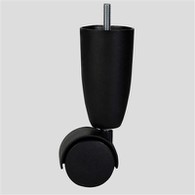
Packing:Bulk carton
Packing information:100 pieces / carton
Trade term:FOB Taiwan

Stem material:Steel
Finished:Zinc & trivalent chromium (Cr3+)
Caster Type:Unooded without lock
Mounting Type:Thread stem mount

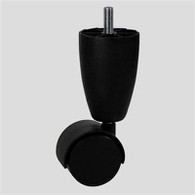
Finished:Zinc & trivalent chromium (Cr3+)
Caster Type:Unooded without lock
Mounting Type:Thread stem mount

Min. order:10,000 pieces
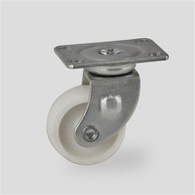
Packing:Bulk carton
Packing information:120 pieces / carton

Cup material:Recycle PP impact
Stem material:Steel
Finished:Zinc & trivalent chromium (Cr3+)


Wheel color:White
Stem material:Steel
Finished:Zinc trivalent chromium (Cr3+)
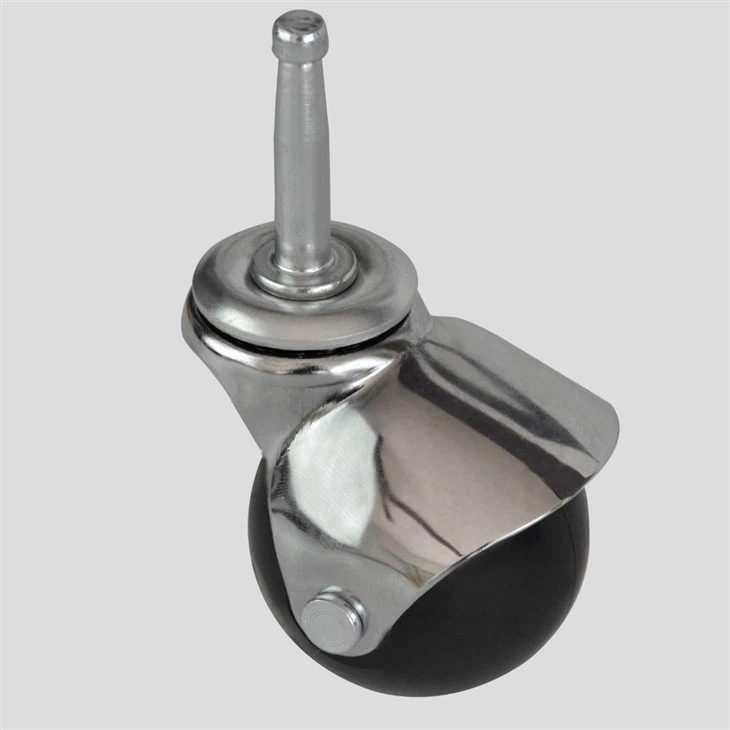
Stem material:Steel
Finished:Zinc trivalent chromium (Cr3+)
Min. order:2,000 pieces
What is Bed Frame Caster
A bed frame with wheels, also known as a caster bed, offers a movable solution to traditional stationary beds. These frames are equipped with wheels or casters at the base, allowing them to be easily rolled across the floor.
Easy Mobility
One of the main benefits of castor wheels is that they provide easy mobility for your equipment. Castor wheels are designed to rotate in any direction, allowing you to move your equipment around with ease. This makes them ideal for use in situations where you need to move your equipment frequently, such as in a hospital or manufacturing setting.
Reduce Strain and Injury
Another benefit of castor wheels is that they can help to reduce strain and injury. When you are moving heavy equipment, it can be difficult and even dangerous to do so manually. Castor wheels allow you to move your equipment with ease, reducing the strain on your muscles and joints and minimising the risk of injury. check out these plastic casters.
Versatility
Castor wheels come in a wide range of sizes, materials, and designs, making them highly versatile. Whether you need small, lightweight castor wheels for furniture or heavy-duty wheels for industrial equipment, there is a castor wheel that will meet your needs. Castor wheels can be used on a variety of surfaces, including carpet, tile, and concrete. Discover caster wheels here.
Improved Stability
Castor wheels also improve the stability of your equipment. By distributing the weight of your equipment across multiple castor wheels, you can improve the stability and balance of your equipment. This can be particularly important for heavy equipment that needs to be moved around frequently.
How to Attach Castors to Your Bed
STEP 1:
Ensure that you have plenty of clear space to move around the bed as you'll need access to all corners of the bed. It's often easier if you are able to lift the bed onto its end so that the underside of the bed is facing you and you have easy access to where you'll be fitting the castors. Don't forget to ask a trusted friend for help lifting the bed base to avoid an injury.
Your castor will be in a plastic bag either attached to the underside of the bed or in the draws themselves.
STEP 2:
Once you have found your castors, they can be installed quite quickly in most cases. Most beds have slots in the corners where you simply attach the castors. Take one castor at a time and push the stem into the grove until you hear a click. If you are struggling to get the castors in place, gently tap the castor with a rubber mallet until you hear the click. Do not use a metal hammer or similar object as this may cause damage to either the castor or bed base.
In rare cases, you will have to make pilot holes in the corner yourself and screw the castors into them. Begin by marking your intended hole with a pencil so you can clearly see where you need to drill. Once you have determined the appropriate size for your drill bit, you can begin drilling your hole. Ideally, your pilot hole should be slightly smaller than the diameter of your screw. Simply screw in the castor to the hole you've just drilled.
Manufacturing Process of Caster Wheels
Metal Plate Cutting Process
The first plate to be cut is the top plate. This is the plate used to mount the caster underneath the object, for example the industrial cart. The process begins with a thick sheet of steel that is cut by a CNC (computer guided machine that combines oxygen and electricity to produce plasma). Plasma cutting is a type of thermal cutting that uses an ionized gas to cut the metal. This means that the process uses heat to melt the metal rather than mechanically cutting it. It's one of the most common methods for cutting thick metal plates, but it's also useful for sheet metal. This method is very accurate and fast when cutting steel sheets.
The next part to be cut is the fork. Forks are the arms that hold each side of the wheel axle. The forks are made out of steel coil, a more flexible and thinner type of steel. The steel coil is rolled out and fed into a punch press machine which breaks it with the yoke shaped dye. The broken yoke shaped pieces are placed onto a forming press. The press bends the piece into the required shape and it also makes a circular groove around the hole in the middle. The hole is filled with steel ball bearings that allow the yoke to swivel. A steel retainer is fitted to hold the ball bearings in place. The grooves of the steel cap are filled with ball bearings as well then they place it onto a punch press and position the yoke on top. The press joins the cap to the yoke's retainer, sandwiching the ball bearings in between. After riveting the top plate to the yoke, put a steel seal over the retainer and lock it in place with a pneumatic press.
Rubber or Nylon Extrusion
The next machining process on the production of caster wheels is the extrusion of the wheel material. To make the wheels, nylon inserts are required. The inserts are placed in an injection molding press, which melt neoprene rubber and injects it into the mold. Once it cools to a solid state, the machine ejects rubber edged wheels. The rubber edge absorbs shock, reduces noise, and prevents damage to the floor or surface.
For bigger sized wheels, a different molding press is used to suit the required size. The molding process to produce the wheel is the same. These larger molding press machines usually make one wheel at a time. After the wheel is ejected from the molding press it is placed on a cool down rack for 2 and a half hours. The wheel mold is made up of two parts, which form a sim once attached. The rubber sim is then grinded down until the surface is smooth.
Assembly of Parts
A two part bearing is placed inside the wheel, and locked into position with a pneumatic press. A steel guide is then installed on either side of the wheel. The steel guides prevent anything from entering the wheel and inhibit its movement. The steel guides position the wheel between the yokes and insert the steel wheel axle. A bolt head secures one end and a nut is attached to the other end. Grease is injected to lubricate the ball bearings.
How do I Remove the Casters from a Bed Frame
Remove the mattress and the box springs from the bed frame. Ask a friend to hold one side of the bed frame off the floor.
Inspect the caster stem for a small pin in the side. Compress the pin with your fingers and pull the caster away from the bed frame.
Grasp the caster by the wheel and pull it straight out of the caster socket if there is no pin.
Insert a small flat-head screwdriver between the edge of the caster stem collar and the caster socket. The caster stem collar is the flange that rests against the caster socket on the bed frame. Twist the screwdriver handle to pry the caster out of the caster socket.
Tap the top of the caster wheel with a hammer to knock the caster away from the caster socket, if you're unable to pry the caster off by pulling or by using the screwdriver. Often one sharp blow with a hammer is sufficient to remove the caster from the bed frame.
Maintenance of Caster Wheels
Lubricating Caster Wheels
When it comes to ensuring that casters last as long as possible, lubrication is crucial. In most situations, this entails lubricating caster wheels and the fittings every six months or so. It's a good rule to follow, and it should be a regular occurrence when all of a company's casters and other components are inspected, oiled, and tested to guarantee they're in good working order.
It should be emphasized that the six-month duration is not universally recommended. Because of the nature of several varieties of casters, they're typically utilized in volatile situations where they become wet. Other casters work with materials that are highly caustic on a regular basis. Casters should be checked and greased on a much more regular basis in each of these situations. Casters should be greased at least once a month if they are exposed to moisture or corrosive compounds frequently.
Checking Caster Fasteners
The hardware fittings that keep the wheel from moving - or falling off completely - are just as crucial as the caster's lubrication. These vital pieces of equipment are prone to wear and tear, especially because they work against gravity on a daily basis in most locations. Every item with casters should be flipped on its side once a month. Then, business managers should start looking at the gear that connects the caster to the machine. That involves looking for nuts, bolts, screws, and other fasteners that maintain the wheel in place.
Anything that is crooked, worn, or out of place should be repaired or replaced as soon as possible. Minor flaws can steadily deteriorate a caster and necessitate its replacement in some cases, so it's critical that they're addressed sooner rather than later.
Caster Wheel Treads
Lubrication and fastenings are necessary, but the caster wheel's integrity is also crucial. In most situations, casters are equipped with a little tread or rubber fitting that lets them turn more smoothly and quietly. The floor on which these treads are rolling may cause them to flatten or be somewhat damaged. Such flaws can cause unnecessary wear and tear on the caster wheel over time, as well as wreak havoc on the hardware and lubricant solutions applied earlier in the maintenance procedure.
Check the treads and construction of a caster wheel for deterioration on a regular basis. Replace a damaged wheel or tread if necessary before it becomes a larger problem requiring the replacement of the complete caster. Most business owners would benefit from a monthly inspection regimen when it comes to guaranteeing the caster's long-term integrity.
Regular Inspection of Caster Wheels
The easiest approach to keep casters in good repair and ensure that they last the entire rated life after purchase is to inspect them on a regular basis. They will survive for many years with proper lubrication, inspection, and maintenance, and will not require costly replacement and installation.
Environment
There are several factors on how the environment a caster is going to be introduced to would affect the caster you would want. The first condition that would be important to know is inside use verse outside use. Indoor casters should be intended for a smoother move, while outdoor casters should have some shock resistance.
Weight Capacity
There are casters that can support 100-150 pounds of weight as well as ones that can support up to 20,000 pounds. It is crucial to make sure you know both which you have and which you need to avoid catastrophic workplace errors. Looking to support a few hundred pounds Plate Mount Casters, Stem Mount Casters, Dolly Casters, or Furniture Casters may be what you're looking for. If you need to support the heavier end of things, you'd want to go with Ergonomic Casters, Kinpinless Casters, or Extra Heavy Duty Casters. There are also Shock Absorbing Casters if you have heavy weight capacity with the potential for movement on the moving equipment.
Floor Condition
Different than environment, floor condition is important to know what kind of wheel and bearing your caster might need. Uneven or inconsistent flooring You might need a pneumatic wheel or a rubber wheel with iron core. Shock Absorbing Casters are a good choice when the movement is generated from the conditions of the rolling surface. On the other end, if the conditions are good, or smooth, you would want to go with a caster using a radial ball bearing, best for a smooth roll.
Rotation
A caster can be rigid or swivel. Rigid casters won't spin and are best intended for back-and-forth motions. We offer a wide selection of Stainless Rigid Casters. Swivel casters can spin up to 360 degrees and are intended for use on equipment with constant, irregular movement.
Wheel Type
There are multiple wheel types available that, combined with different axle and bearing styles, can perfectly fit your needs. Molden Polyurethane to Iron Core wheels, for example, are made from resin and pressed under very high temperatures to offer chemical resistant protection. Depending on the diameter of the wheel, they can support between 400 – 4,000 pounds. V-Groove wheels are intended for track use and can support upwards of 8,000 pounds. Looking for parts for your loading equipment Then pneumatic wheels, which use a traditional inflated tube, would be your best.
Our Factory

Our Certificate
In the past 45 years, Bai Ye still persists in the guarantee of quality. Not only has complete internal testing machines but most of our products have passed the SGS test since 2006. In 2017, we passed the ISO- 9001, California Proposition 65, and other international certifications.


FAQ
Hot Tags: bed frame caster, China bed frame caster manufacturers, suppliers, factory, Plastic Adjustable Feet, , , Castor Wheels for Beds, Bed Base with Castors