


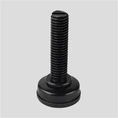
Are grip neck stem casters resistant to static electricity?
As a supplier of grip neck stem casters, I've encountered numerous inquiries regarding the static - electricity resistance of these essential components. In this blog, we'll explore the nature of static electricity, its implications for casters, and whether grip neck stem casters are resistant to it.
Understanding Static Electricity
Static electricity is a phenomenon caused by an imbalance of electric charges within or on the surface of a material. When two objects come into contact and then separate, electrons can be transferred from one object to the other. This results in one object becoming positively charged and the other negatively charged. The build - up of these charges can lead to static discharge, which is often felt as a shock or seen as a spark.
In industrial and office settings, static electricity can have several negative effects. It can attract dust and debris, which can cause malfunctions in sensitive equipment. Moreover, in environments where flammable substances are present, static discharges can pose a significant fire or explosion hazard.
Caster Materials and Static Electricity
The resistance of casters to static electricity largely depends on the materials from which they are made. Casters can be constructed from a variety of materials, including rubber, polyurethane, nylon, and metal.


Rubber casters are a popular choice in many applications. Natural rubber, in its pure form, is an insulator. This means that it can build up static charges easily as it moves across surfaces. However, anti - static rubber compounds have been developed. These compounds contain additives that allow the static charges to dissipate gradually, reducing the risk of static discharge.
Polyurethane casters are known for their durability and smooth rolling. Similar to rubber, standard polyurethane can be a good insulator and thus accumulate static electricity. But, like rubber, there are anti - static polyurethane formulations available. These anti - static polyurethanes have enhanced electrical conductivity, enabling the safe release of static charges.
Nylon casters are lightweight and have good chemical resistance. Nylon is also an insulating material, and without proper treatment, it can build up static charges. Some manufacturers treat nylon casters with anti - static agents during the manufacturing process to make them more resistant to static electricity.
Metal casters, on the other hand, are conductors of electricity. They do not build up static charges because any charge that accumulates on the surface of the metal can quickly flow through the caster and into the ground. This makes metal casters inherently resistant to static electricity.
Grip Neck Stem Casters and Static Resistance
Grip neck stem casters are available in different materials, and their resistance to static electricity varies accordingly.
If you are using grip neck stem casters made of standard rubber or polyurethane, they may not be resistant to static electricity. In a typical office or industrial environment where these casters are used on smooth floors, they can easily build up static charges as they roll.
However, many suppliers, including us, offer grip neck stem casters with anti - static properties. These casters are specifically designed to prevent the build - up of static electricity. They are made from anti - static rubber or polyurethane compounds, or they are treated with anti - static coatings.
For example, in an office environment, where there are a lot of electronic devices, static electricity can be a problem. Using anti - static grip neck stem casters on office chairs can help protect sensitive electronic equipment from the damage that static discharges can cause. You can find a wide range of office chair casters on our website, such as 2 Inch Plate Casters, 2 Inch Office Chair Casters, and 3 Inch Office Chair Casters.
In industrial settings, especially those dealing with flammable materials or sensitive electronics, anti - static grip neck stem casters are essential. They can prevent static discharges that could potentially lead to explosions or damage to expensive equipment.
Testing for Static Resistance
To ensure that grip neck stem casters are resistant to static electricity, proper testing methods are employed. One common method is to measure the surface resistance of the caster material. A lower surface resistance indicates better conductivity and, therefore, better static - dissipation properties.
Another test involves measuring the time it takes for a static charge to dissipate from the caster. Casters that can quickly dissipate static charges are considered more resistant to static electricity.
Conclusion and Call to Action
In conclusion, whether grip neck stem casters are resistant to static electricity depends on their material composition. While standard materials like rubber, polyurethane, and nylon can build up static charges, there are anti - static options available. Metal casters are inherently resistant to static due to their conductive nature.
If you are in the market for grip neck stem casters and need them to be resistant to static electricity, we are here to help. We offer a wide range of anti - static casters suitable for various applications, from office chairs to industrial equipment. Contact us to discuss your specific requirements and start a purchase negotiation. We are committed to providing high - quality casters that meet your static - resistance needs.
References
- "Static Electricity: Principles and Applications" by Melcher, James R.
- "Materials Science for Engineers" by Van Vlack, Lawrence H.