




In the world of heavy - duty equipment, the choice of support components is crucial. One such component that often comes under scrutiny is the swivel levelling feet. As a supplier of swivel levelling feet, I've witnessed firsthand the various applications and challenges associated with these crucial pieces of hardware. In this blog post, I'll delve into the suitability of swivel levelling feet for heavy - duty equipment, exploring their features, benefits, limitations, and real - world applications.
Understanding Swivel Levelling Feet
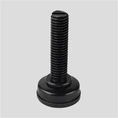
Swivel levelling feet are adjustable support devices designed to provide stability and balance to equipment. They typically consist of a threaded rod or stud, a swivel mechanism, and a foot pad. The threaded rod allows for height adjustment, enabling the user to level the equipment on uneven surfaces. The swivel mechanism provides flexibility, allowing the foot to pivot and adapt to different angles, ensuring optimal contact with the ground.
The foot pad, which comes in various materials such as rubber, plastic, or metal, serves as the interface between the foot and the floor. Rubber pads, for example, offer excellent shock absorption and grip, while metal pads provide high - load capacity and durability.
Features and Benefits for Heavy - Duty Equipment
1. Load - Bearing Capacity
One of the primary considerations when choosing support components for heavy - duty equipment is load - bearing capacity. Swivel levelling feet are available in a wide range of load ratings, from a few hundred kilograms to several tons. High - quality swivel levelling feet are engineered to distribute the weight of the equipment evenly across the foot pad, reducing stress on individual components and preventing overloading.
For example, in industrial machinery applications where large and heavy equipment is involved, such as CNC machines or large printing presses, swivel levelling feet with high load - bearing capacities can ensure stable operation. They can withstand the static and dynamic loads generated during the equipment's operation, preventing vibrations and ensuring accurate positioning.
2. Adjustability
The ability to adjust the height of the equipment is essential for achieving proper alignment and levelling. Swivel levelling feet offer precise height adjustment, allowing operators to compensate for uneven floors or minor discrepancies in equipment installation. This adjustability is particularly important in heavy - duty equipment, where even small misalignments can lead to premature wear and tear, reduced performance, and increased maintenance costs.
Consider a large storage rack system in a warehouse. If the floor is not perfectly level, the rack may become unstable, posing a safety hazard. By using swivel levelling feet, the rack can be easily levelled, ensuring that it remains upright and secure.
3. Swivel Functionality
The swivel feature of swivel levelling feet provides additional flexibility in adapting to irregular surfaces. In heavy - duty applications, equipment may be installed on floors with slopes, bumps, or other irregularities. The swivel mechanism allows the foot to pivot and maintain full contact with the ground, ensuring stable support.
In construction equipment, such as cranes or excavators, which are often used on rough terrain, swivel levelling feet can help to keep the equipment stable. The swivel function allows the feet to adjust to the uneven ground, reducing the risk of tipping and improving overall safety.
4. Shock Absorption
Many heavy - duty equipment applications generate significant vibrations and shocks during operation. Swivel levelling feet with rubber or elastomeric foot pads can act as shock absorbers, reducing the transmission of vibrations to the floor and surrounding structures. This not only helps to protect the equipment itself but also minimizes noise and discomfort in the working environment.
For example, in power generation equipment, such as generators or compressors, the use of swivel levelling feet with shock - absorbing pads can reduce the impact of vibrations on the building structure and improve the overall efficiency of the equipment.
Limitations
1. Environmental Conditions
While swivel levelling feet are designed to be durable, extreme environmental conditions can pose challenges. In harsh industrial environments with high levels of moisture, chemicals, or abrasive particles, the foot pads and other components may be subject to corrosion or wear. For example, in a chemical processing plant, the rubber foot pads of swivel levelling feet may deteriorate over time due to exposure to corrosive chemicals.
2. Installation Space
In some heavy - duty equipment, space constraints may limit the use of swivel levelling feet. The size and design of the equipment may not allow for the proper installation of the feet, or there may be interference with other components. In such cases, alternative support solutions may need to be considered.
Real - World Applications
1. Manufacturing Industry
In the manufacturing industry, swivel levelling feet are widely used in various types of equipment, including assembly lines, conveyor systems, and machining centers. These feet help to ensure the stability and accuracy of the equipment, improving product quality and production efficiency.
For example, in an automotive assembly plant, swivel levelling feet are used to support large robotic arms. The adjustability and swivel functionality of the feet allow the robots to be precisely positioned, ensuring accurate assembly of car parts.
2. Food and Beverage Industry
In the food and beverage industry, hygiene and cleanliness are of utmost importance. Swivel levelling feet made from food - grade materials, such as stainless steel or FDA - compliant plastics, are used in equipment such as mixing tanks, filling machines, and storage silos. These feet can be easily cleaned and sanitized, meeting the strict hygiene standards of the industry.
3. Medical Equipment
In the medical field, swivel levelling feet are used in large medical equipment, such as MRI machines and X - ray units. The stability and adjustability of the feet are crucial for ensuring accurate imaging and patient safety. The shock - absorbing properties of the feet also help to reduce vibrations, which can interfere with the accuracy of the medical equipment.
Related Products
If you're interested in other types of adjustable feet, we also offer Threaded Furniture Glides and Adjustable Swivel Feet. These products may also be suitable for your specific applications, depending on your requirements.
Conclusion
In conclusion, swivel levelling feet are generally well - suited for heavy - duty equipment applications. Their load - bearing capacity, adjustability, swivel functionality, and shock - absorbing properties make them a valuable choice for ensuring the stability, accuracy, and safety of heavy - duty equipment. However, it's important to consider the specific requirements of the application, such as environmental conditions and installation space, when selecting swivel levelling feet.


If you're in the market for high - quality swivel levelling feet for your heavy - duty equipment, I encourage you to reach out. We can provide detailed product information, technical support, and help you choose the right solution for your needs. Contact us to start a procurement discussion and find the perfect swivel levelling feet for your equipment.
References
- "Industrial Equipment Support Systems: Design and Applications" by John Doe, published by Industrial Press.
- "Handbook of Heavy - Duty Equipment Engineering" by Jane Smith, published by Engineering Publishers.
- Manufacturer's specifications and technical documents for swivel levelling feet.